
Why MMA is the Best Full-Body Workout”
latest posts
latest posts
 Discipline: The Hidden Strength Behind Martial Arts on27 Nov 2025
 Discipline: The Hidden Strength Behind Martial Arts on12 Oct 2025
 The Role of Jiu-Jitsu in Military Training on12 Oct 2025
If you want one training style that hits strength, endurance, mobility, and real-world skill—without spending 2 hours hopping between machines—Mixed Martial Arts (MMA) is hard to beat. You don’t need to fight professionally to train like a mixed martial artist. You just need a smart plan and a coach who keeps things safe and scalable.
Below is a clear, no-nonsense guide to why MMA works so well for total-body fitness, plus a simple starter plan you can follow.
1) One session = Strength + Cardio + Core
Most workouts force a choice: lift for strength or do cardio. MMA blends both:
Strength: Clinch work, takedowns, sprawls, wall-walks, and ground control demand full-body force.
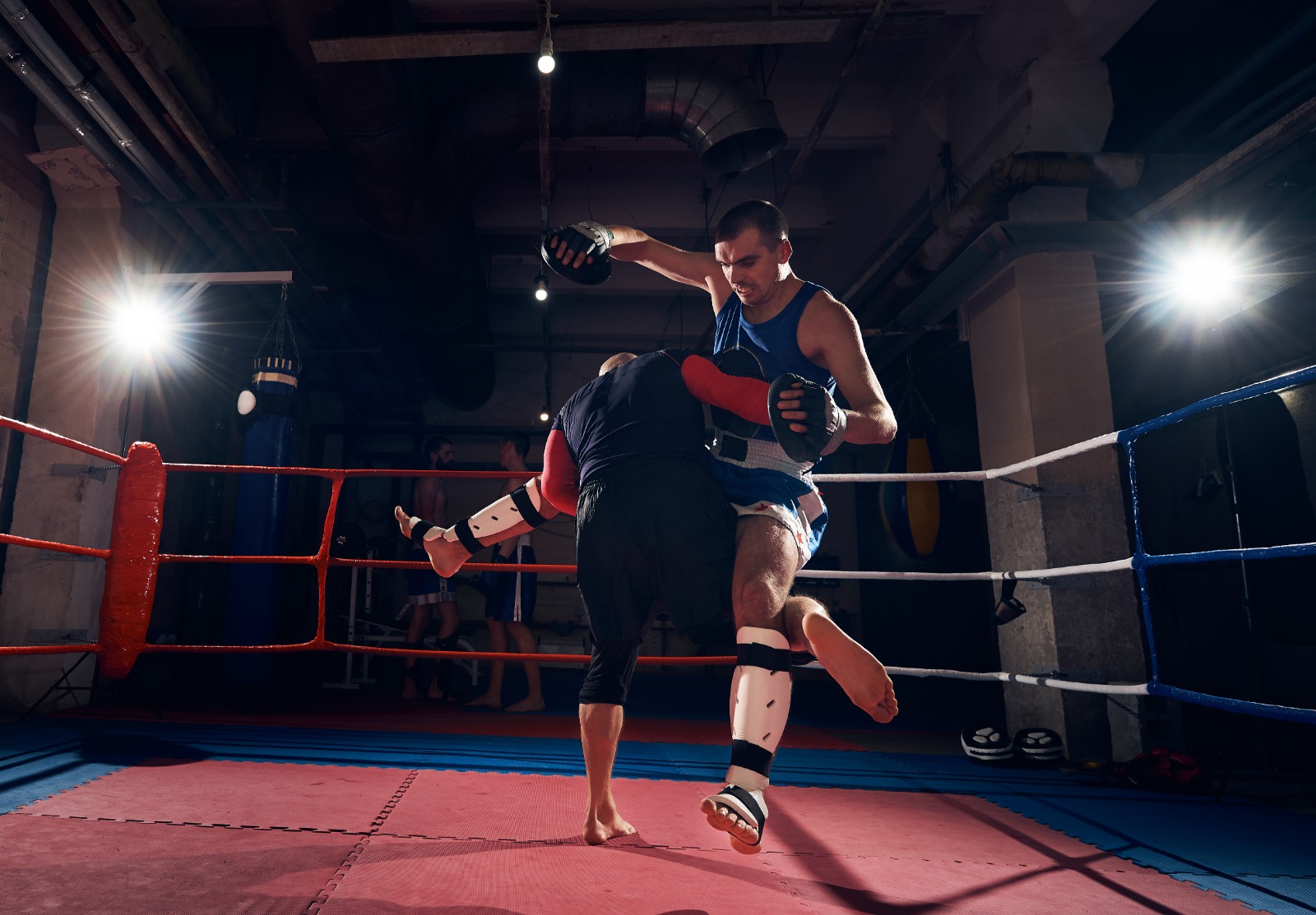
Cardio: Pads, bag rounds, and shark-tank drills spike your heart rate into conditioning zones fast.
Core all the time: Strikes travel through your hips and trunk; grappling is basically “live” core training.
Result: You build muscle, burn fat, and improve conditioning in the same hour.
2) Real movement, not isolated muscles
MMA uses compound, athletic patterns—push, pull, rotate, hinge, crawl, get-up—under load and speed:
Striking: Rotational power (hips/obliques), shoulder conditioning, footwork coordination.
Grappling: Isometric strength (pins), dynamic pulling (grips), hip drive (bridges), and whole-body leverage.
Transitions: Getting up from the ground, changing levels, cutting angles—functional movement you’ll use in sport and life.
3) Full energy-system training (without overthinking it)
Great fitness isn’t just “running more.” MMA unintentionally trains all three energy systems:
ATP-PC (0–10s): Explosive shots, power punches, blast doubles.
Glycolytic (20–90s): Intense pad rounds, scramble-heavy grappling.
Aerobic (2–5+ min): Longer rounds, steady drills, active recovery.
That variety builds a big gas tank and the ability to explode when it matters.
4) Mental toughness without the macho nonsense
The work is challenging but controlled. You’ll learn to stay calm under pressure, think clearly, and pace yourself. That mental carryover shows up everywhere—work, studies, even day-to-day stress.
5) It’s endlessly scalable (beginner to pro)
Good gyms scale everything:
New? Start with stance, footwork, basic combos, solo drills, and light positional grappling.
Intermediate? Add live rounds with clear rules, more complex chains, and conditioning finishers.
Advanced? Increase intensity, strategy focus, and competition prep blocks.
No one needs to brawl to get fit. Smart MMA is technique-first, safety-first.
6) The physique benefits (without chasing them)
Most people notice:
Shoulders & back: From pad work, clinch, and grip fighting.
Hips & legs: From level changes, kicks, sprawls, and takedowns.
Midsection: Constant rotation, bracing, and anti-rotation on the ground.
You’ll look athletic because you’re training like an athlete.
7) Community and accountability
You’ll drill, hold pads, and problem-solve with partners. That social element keeps you consistent—and consistency beats any “perfect” plan.
Simple 60-Minute MMA Session (Beginner-Friendly)
Goal: Full-body training with technique, cardio, and strength—no chaos.
Warm-Up (8–10 min)
Joint prep, light shadowboxing, hip/ankle mobility, shoulder band work.Striking Block (15 min)
3 × 3-min rounds: jab-cross, low-kick, basic defense; focus on clean form
1-min rest (footwork or light jump rope)
Grappling Block (15 min)
Hip escape, technical stand-up, bridge-rolls → partner positional drills (side control to guard)
Add time-cap games (e.g., 30-sec escape drills)
Conditioning Finisher (8–10 min)
20s work / 40s rest × 6–8 rounds
Sprawls, medicine-ball slams, fast straight punches on bag/pads
Cool-Down (5–7 min)
Breathe through nose, long exhale; stretch hips/hamstrings/pecs; easy walk.
Tip: Keep round lengths consistent (2–3 minutes) so your body learns to manage effort.
8-Day Sample Week (No Sparring Required)
Day 1 – Striking & Core
Footwork → jab-cross-hook progressions → bag rounds → core carry/anti-rotation work.Day 2 – Grappling Fundamentals
Hip-escapes, bridging, technical stand-ups → guard retention drills → positional control.Day 3 – Mixed Conditioning
Pad intervals + sled pushes/rows or kettlebell swings → mobility finish.Day 4 – Technical Flow Day
Light shadowboxing → drill chains (sprawl → shot → finish or guard pass → side control → mount) → easy bike.
If you only have 2 days/week, do Day 1 + Day 2 and sprinkle in 2 short 20-minute conditioning sessions at home.
Safety First (Non-Negotiable)
Mouthguard for any partner work; gloves and wraps for striking; trimmed nails; no jewelry.
Start light contact only after your coach gives the green light.
Pain ≠ progress. Good soreness is normal; sharp pain means stop and adjust.
Common FAQs
Q: I’m not fit enough for MMA—should I wait?
A: Start now. Good sessions scale to your level. You’ll get fit by doing the training, not before it.
Q: Will I get hurt?
A: Risk exists in any sport. Reputable gyms minimize it with coaching cues, protective gear, rules, and progressive contact.
Q: I only want fitness, not fighting.
A: Perfect. Focus on pad work, bag rounds, partner drills, and positional grappling—zero hard sparring needed.
related posts
related posts