Introduction
Feeling safe isn’t about being a superhero — it’s about having a few simple, effective tools you can rely on when something goes wrong. These five self-defense moves are practical, easy to learn, and built for real-world situations. You don’t need to be huge or super-fit to use them; you just need practice, timing, and the right mindset: get to safety, not win a fight.
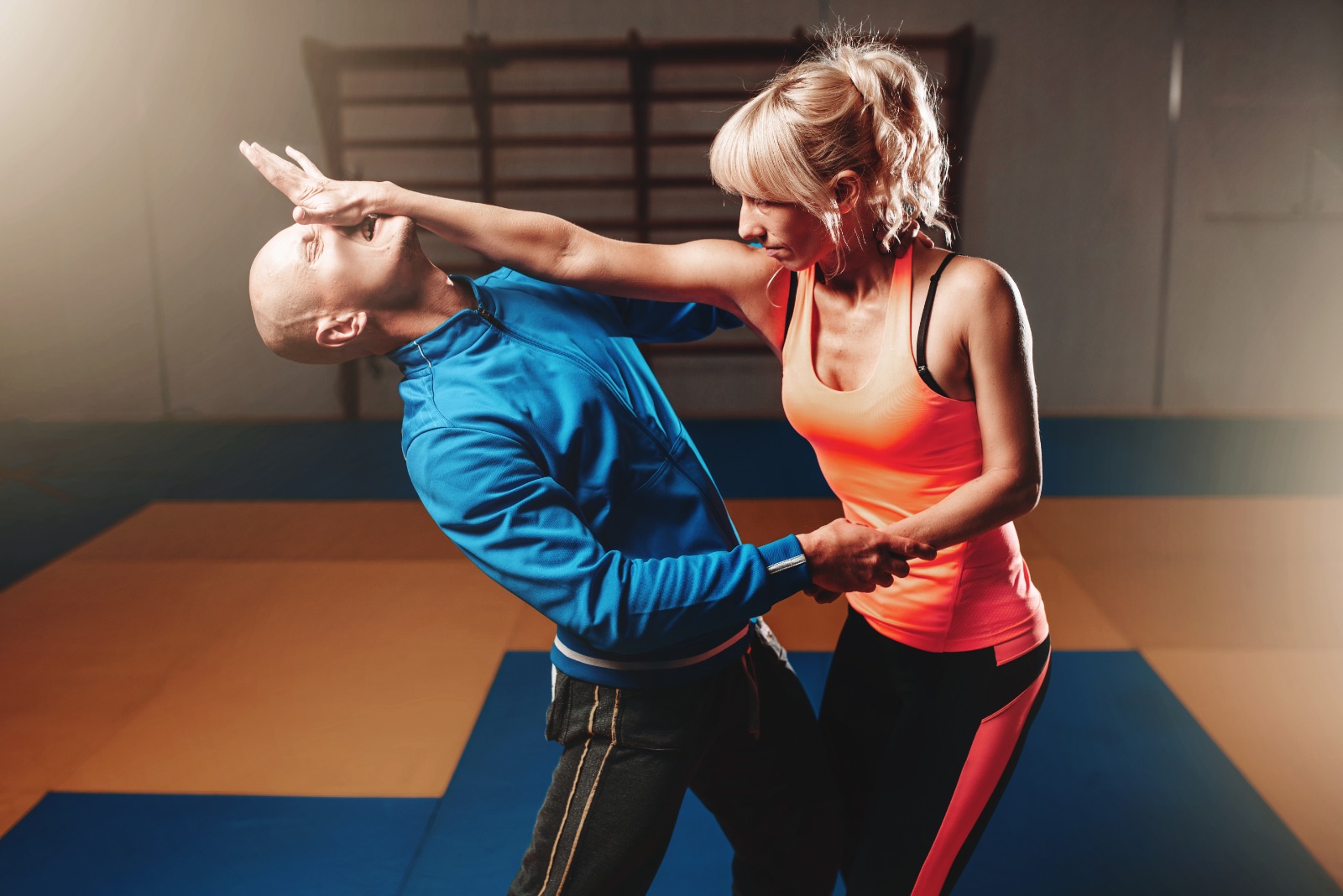
1) Palm Strike — fast, controlled, and reliable
When to use: When someone is close enough to grab or push you and you need space quickly.
How to do it (step-by-step):
Stand with feet shoulder-width apart; one foot slightly forward.
Keep your palm open, fingers together and thumb relaxed out of the way.
Use the base of your palm (the heel) to strike straight into the attacker’s nose or chin.
Drive the strike with your shoulder and hips, not just your arm.
Why it works: The heel of the palm transmits force well and reduces chance of injuring your fingers.
Practice: Work on accuracy and snap on a pad — 3 sets of 15–20 reps.
2) Hammerfist Down — quick, powerful, and easy to land
When to use: If someone is above you, holding you, or you need a downward, surging strike.
How to do it:
Form a loose fist but strike with the pinky side (the hammer part).
Drop your hand in a short, sharp motion targeting the top of the head, collarbone, or side of the neck.
Use your body weight and a short “drop” to add force.
Why it works: It’s compact, hard to block, and can stun enough to escape.
Practice: Start slow on a pad, then add speed while maintaining good alignment.
3) Wrist Release — the simplest way out of a grab
When to use: When someone grabs your wrist or attempts to restrain your arm.
How to do it:
Don’t pull straight back. Instead, rotate your wrist toward the attacker’s thumb (the weakest part of their grip).
Twist and pull your hand out in the same motion while stepping or turning your shoulder slightly away.
If both hands are grabbed, drop your weight and twist your torso to create slack before slipping out.
Why it works: Grips are weaker toward the thumb — small, precise movements beat raw force.
Practice: Rehearse with a partner who applies steady, controlled holds so you can learn the timing.
4) Knee Strike — devastating at close range
When to use: When the attacker is directly in front of you and within knee-range — especially if they’re holding you.
How to do it:
Plant one foot back for balance.
Drive your knee upward into the attacker’s groin, lower abdomen, or inner thigh with a short, explosive motion.
Use your hips to generate power; pull the knee back and create distance immediately after.
Why it works: A well-placed knee is painful and disorienting — it buys seconds to escape.
Practice: Use a heavy bag or pad; focus on speed and hip drive over maximum power at first.
5) Groin Kick — a last-resort, escape tool
When to use: When you need an immediate, disabling strike to get away.
How to do it:
Raise your knee or snap a front kick aimed low at the groin or lower abdomen.
Keep the kick quick and retract immediately to reset balance.
Why it works: It’s a high-impact, high-discomfort target that quickly impairs the attacker.
Important: Use only in genuine danger and as a means to flee — not for escalation.
Training tips (apply to all moves)
Technique first, speed second. Nail the mechanics before you add force.
Drill with partners and pads. Controlled sparring builds timing and confidence.
Routine: Warm-up → slow technique → medium speed → controlled partner work.
Conditioning matters: Strengthen your core, legs, and cardio so moves are effective under stress.
Repeatability: Practice short daily sessions (10–15 minutes) rather than long infrequent ones.
Safety, boundaries & legal note
Self-defense aims to create an opportunity to escape, not to “teach someone a lesson.” Always assess the situation — respond only to protect yourself or others. Know the legal standards for self-defense where you live; using force beyond what’s necessary can have legal consequences.
Conclusion
These five moves — palm strike, hammerfist, wrist release, knee strike, and groin kick — are straightforward, trainable, and highly practical. The goal isn’t to fight forever; it’s to make a choice that lets you leave the danger behind. Practice them, build simple muscle memory, and pair them with awareness and avoidance habits to truly improve your safety.

 Discipline: The Hidden Strength Behind Martial Arts on27 Nov 2025
 Discipline: The Hidden Strength Behind Martial Arts on12 Oct 2025
 The Role of Jiu-Jitsu in Military Training on12 Oct 2025